
The best dating apps for divorced singles over 40 are not chosen by divorce status alone. Start with services whose current settings let you state relationship goals, limit profile exposure, manage conversations, and review paid access before committing. OurTime and SilverSingles deserve an early look for their mature-singles focus, while Match, eHarmony, and Bumble offer different formats to compare on those points.
Published by TOP Dating
After Divorce, Your 40s Change What You Need From an App

Dating after divorce often calls for more structure than an app built around constant access. Parenting schedules, demanding workweeks, and a preference to meet slowly make notification controls, clear intent fields, and manageable conversations more important than a rapid stream of matches. Match offers a mainstream dating-service route, while eHarmony is a relationship-focused option for a more intentional approach. OurTime and SilverSingles focus on mature singles, which matters when an age-oriented setting is important. Test Bumble’s mobile-first format only if its pace and current controls fit the time you want to give dating.
Privacy, Visibility, and Relationship-Intent Controls
None of these services should be chosen on name recognition alone. Review the current settings before adding personal history, workplace details, children’s information, or a divorce narrative.
Match
Mainstream service for someone comparing a broader dating format.
Profile discoverability, relationship-goal fields, blocking and reporting, and whether messages are limited to people who have expressed interest in each other.
Suitable only when its current exposure and messaging settings support your preferred pace.
eHarmony
Relationship-focused service for a more intentional matching process.
How relationship preferences are displayed, what profile details are optional, and the available block and communication controls.
More relevant when the matching process supports discretion and gradual disclosure.
OurTime
Mature-singles service for people who prefer an age-oriented dating environment.
Age and distance preferences, visibility choices, blocking tools, and the amount of profile information shown before contact.
An early check when a mature-singles setting matters more than a general-purpose app format.
SilverSingles
Another mature-singles service to compare independently with OurTime; do not assume both function alike.
Intent and preference options, profile visibility, reporting routes, and any communication limits.
Worth comparing when you want to see whether its current structure feels more manageable than another mature-singles option.
Bumble
Mobile-first dating app for someone comfortable evaluating a contemporary app workflow.
Discovery preferences, block and report tools, notification settings, and the communication sequence before a match moves forward.
A fit when the mobile experience supports boundaries instead of creating pressure to respond immediately.
Free and Paid Access Change the Matching Experience
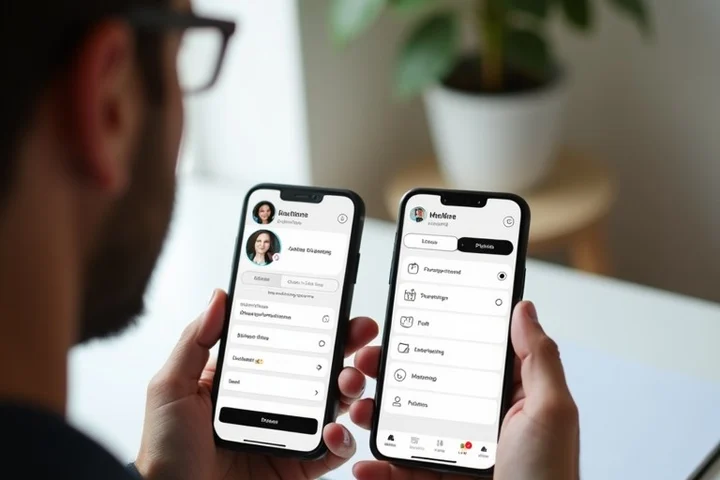
Free access commonly lets a person create an account, build a profile, and get a preliminary view of the matching environment. Paid access may change the practical experience by opening communication, more detailed filters, or additional visibility choices. Those divisions vary by service and can change, so a free account is useful as an evaluation period rather than proof that the service will meet your needs.
On Match and eHarmony, separate two questions: whether the unpaid experience reveals enough profile detail to evaluate compatibility, and whether the paid tier is needed before a meaningful conversation can begin. For OurTime and SilverSingles, check whether the mature-singles setting is paired with usable age, distance, and intent preferences for the people you hope to meet. On Bumble, assess whether the mobile workflow, notifications, and available preferences let you use the app without treating every spare moment as dating time.
Verify each provider’s current plan, feature, and renewal terms in its official app or website documentation before paying. A subscription has limited value when it increases message volume without improving intent clarity, privacy, or the ability to organize a conversation around an already-full schedule.
Signs an App Matches Your Readiness and Routine
- Fit Signal: Profiles and conversations make it easy to identify compatible relationship intentions. What It Indicates: You can focus on people seeking a similar pace without treating divorce as the central topic of every early exchange.
- Fit Signal: Message volume remains manageable, and notifications can fit around parenting or work responsibilities. What It Indicates: The app supports consistent use without creating pressure to answer quickly or keep multiple conversations active.
- Fit Signal: Current settings allow selective visibility, blocking, and a clear route to report unwanted contact. What It Indicates: You retain control over who can engage with your profile and when a connection progresses.
- Fit Warning: The app experience rewards urgency, pushes paid access before you can evaluate the basics, or makes early disclosure feel expected. What It Indicates: Its matching format may conflict with a deliberate return to dating, even if the service otherwise appears relevant.
For divorced singles over 40, the stronger choice is the app whose current controls protect privacy, clarify intent, and fit real scheduling limits. Compare mature-singles services and mainstream options by those conditions, not by a promise of faster results.
References
- OurTime — OurTime
- SilverSingles — SilverSingles
- Bumble — Bumble
- Match — Match
- eHarmony — eHarmony