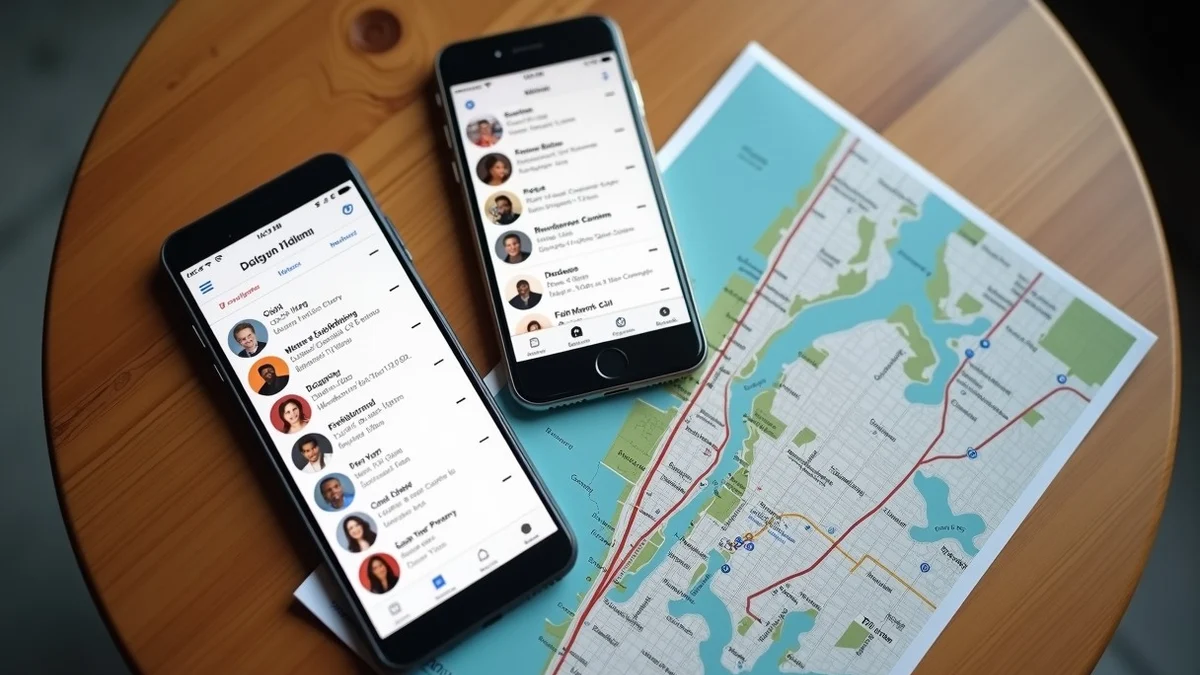
Gay singles in New York City can start with Grindr or SCRUFF for a gay-focused dating and social space, then add Hinge or Tinder if their current identity settings and nearby profiles fit the goal. Choose based on whether you want a relationship, casual dating, companionship, or time to explore—and whether a match will travel from their borough to yours.
Published by TOP Dating
New York’s leading gay dating apps serve different relationship goals
- App: Grindr Shortlist Role: A gay-focused starting point for local dating and social discovery. Useful For: Broad exploration, companionship, casual dating, or relationship-minded connections when profiles clearly state the same aim. Constraint To Watch: A busy local grid gives you more choices, but it does not clarify what you want.
- App: SCRUFF Shortlist Role: A second gay-focused choice for comparing the people and conversations within a radius you can manage. Useful For: Dating, social connection, and a broader search among gay, bi, trans, and queer people. Constraint To Watch: Check its current local activity on its own; do not assume it matches another app.
- App: Hinge Shortlist Role: A general dating-app option to test alongside a gay-focused app. Useful For: People who prefer profile detail and an early conversation before deciding to meet. Constraint To Watch: Check that the current gender, discovery, and distance settings show the people you actually want to meet.
- App: Tinder Shortlist Role: Another general dating-app option for a separate discovery lane. Useful For: Broad exploration when its available identity and location controls align with your preferences. Constraint To Watch: A larger set of profiles does not automatically produce more compatible matches or more people ready to meet.
When borough distance turns a promising match into a logistics problem
In New York City, map radius matters more than it first appears. A match in Chelsea, Hell’s Kitchen, or Greenwich Village could be easy to see after work if you are already in Manhattan. The same straight-line distance to Williamsburg or Astoria might mean another route, a transfer, and a weeknight plan that feels less appealing. Those matches are not automatic dead ends. Set distance around how you actually travel, not the most optimistic version of your social life.
Set your initial range around places you would reach for a first meeting, then widen it when a conversation seems genuinely promising. Brooklyn, Queens, or Manhattan in a profile does not tell the whole story; neighborhood clues, work schedules, and willingness to meet somewhere easy for both people matter too. If you are dating over 40 in New York, this may matter more than a huge stack of nearby profiles. A compatible person who makes a real plan usually beats ten technically close matches who are hard to meet.
Do not treat every cross-borough match as a test of enthusiasm. Early on, agreeing to meet near a convenient transit point or to alternate neighborhoods tells you whether the connection can develop.
Identity controls, privacy tools, and moderation signals
A gay-focused label helps, but check the app before settling on it. Review its current options for gender and matching preferences, who can see your profile, blocking, reporting, and any verification indicators it offers. Verification can increase confidence, but it does not prove someone is trustworthy. Straightforward reporting routes, easy blocking, and profile-viewing settings you understand matter more than vague assurances. Leave identifying details, workplace information, and your home address out of an early profile, and take harassment or repeated unwanted demands seriously. In New York City, the Anti-Violence Project provides support and advocacy for LGBTQ+ and HIV-affected communities affected by violence.
A large match pool can offer speed without offering depth
New York can make almost any app look full at first glance. That helps when you want to start conversations quickly, especially on Grindr or SCRUFF, which are built around gay, bi, trans, and queer communities. A dense feed can also make it hard to tell active users from people who are only browsing or whose stated intentions do not fit yours. Speed starts conversations; it does not create depth.
Use the first several days to see what the app delivers. Check whether profiles within your travel range name compatible goals, whether conversations move beyond a reaction, and whether people make a concrete plan instead of drifting indefinitely. Keep Hinge or Tinder in the mix if their local profiles offer a different kind of interaction, but do not assume a general app fixes unclear intentions. Someone can say they want a long-term relationship and still be unavailable; someone seeking companionship can be entirely sincere.
The point is not to chase the largest possible pool. It is to find enough active New Yorkers who share your intent and can meet within a sensible distance. A smaller, better-filtered experience often produces less noise and more usable conversations.
Compare apps against your actual dating pattern
Give each app a simple personal score after a short trial: zero, one, or two points for relationship-goal fit, identity and matching controls, workable borough radius, active local profiles, privacy tools, and the value of any paid features you are considering. You are not measuring which app wins New York City. You are measuring whether it works for your actual Tuesday night, your boundaries, and your preferred kind of connection.
For example, an app may earn strong marks because the people you see are within a manageable route from Williamsburg to Manhattan, but lose ground if its privacy settings feel unclear. Another may offer plenty of profiles yet score poorly because you keep encountering mismatched intentions. Check the current paid features inside the app before subscribing, and ask what practical obstacle the payment removes for you: limited discovery, distance control, profile visibility, or nothing that actually changes your experience. My candid view: paying for more options before you have tested local fit is usually backwards. Keep the two apps that give you the clearest conversations and the most realistic chance of meeting.
The useful New York City dating-app choice is rarely one permanent winner. Pair a gay-focused app such as Grindr or SCRUFF with a carefully tested general option such as Hinge or Tinder, then let your goal, borough logistics, and comfort with the privacy tools narrow the field. A manageable radius and clear intentions will do more for your dating life than an impressive-looking queue of strangers.
Where the factual details come from
- New York City — official information — New York City
- Anti-Violence Project — official information — Anti-Violence Project
- SCRUFF — official information — SCRUFF
- Hinge — official information — Hinge
- Tinder — official information — Tinder
- Grindr — official information — Grindr