
When choosing a dating app for lesbian women, compare identity controls, nearby participation, relationship-goal cues, and first-contact rules instead of relying on broad membership claims. HER and Lex offer queer-focused starting points; Hinge, Bumble, and OkCupid are general dating services to compare by the same inclusion and profile-control criteria.
Published by TOP Dating
Which identity settings indicate a genuinely inclusive app?
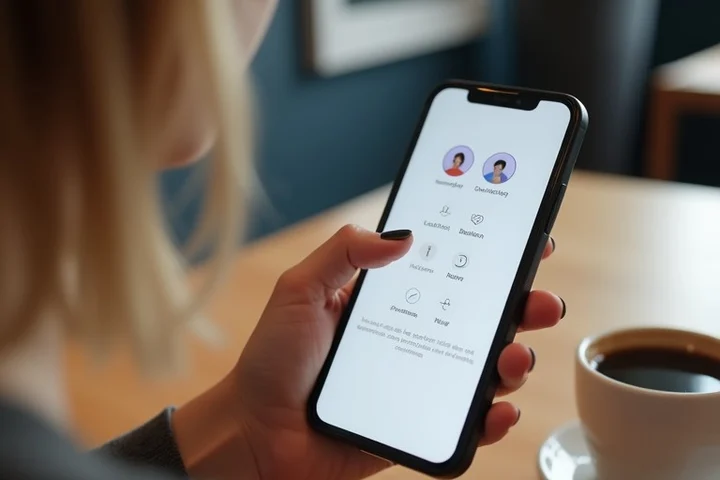
- Criterion: Gender and orientation choices What To Check: Choose identity options that let a woman describe her gender and orientation accurately without placing her in an irrelevant category or match pool.
- Criterion: Pronoun visibility What To Check: Check whether pronouns can be shown, hidden, or left unspecified based on the member’s preference. What matters is control, not the length of the menu.
- Criterion: Discovery preferences What To Check: Confirm that members can define whom they want to discover and who can discover them. A lesbian profile should not be shown automatically to people outside its stated preferences.
- Criterion: Exclusion and boundary controls What To Check: Find tools for excluding unwanted match categories and blocking or reporting profiles that ignore those choices. Make sure those controls are easy to locate before extensive messaging begins.
- Criterion: Profile representation What To Check: Check whether members can describe relationship context, pronouns, and personal limits in their own profile language. HER’s stated focus on LGBTQ+ women and queer people makes it a focused option to review, though its current settings still need direct confirmation.
Local participation matters more than a national member count
National membership or download claims say little about an app in one area. Lesbian singles in Corpus Christi need to know whether the app shows recent nearby activity, offers a distance range that fits the trip, and provides enough profile detail to judge fit. Replies matter too: a smaller active group can be better than a larger group that appears inactive. HER or Lex may appeal because their official descriptions focus on queer users, while a general service such as Hinge or OkCupid deserves a look when nearby results are stronger. Check local participation before assuming it.
When companionship, casual dating, and partnership require different filters
The same identity fit suits very different dating goals. Someone seeking companionship may value prompts about interests and free time; someone seeking casual dating needs clear expectations before matching; and someone pursuing partnership needs goal fields and profiles that address commitment, lifestyle, or future plans. Check whether HER, Lex, Hinge, Bumble, or OkCupid offer goal selections, searchable filters, or prompts that draw out these differences. Without clear tools, members must depend more on profile depth to sort intentions before starting a conversation.
Warning signs of fetishization, couples seeking a third, or false identity
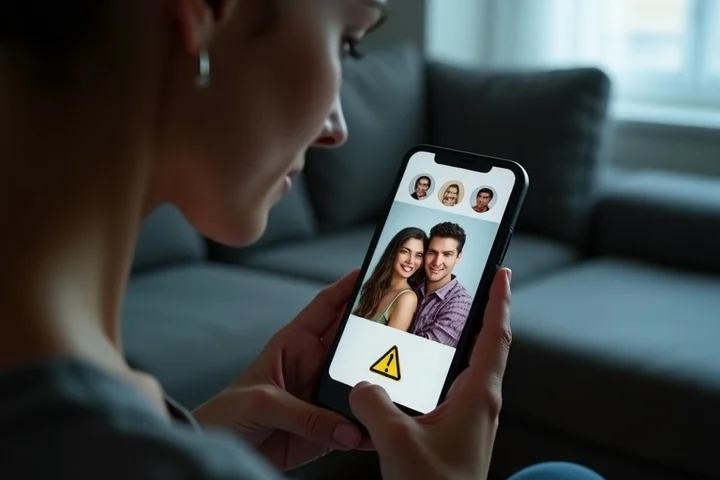
- Signal: Couple-centered presentation Meaning: A profile dominated by two people, a partner’s account, or language about finding a third may indicate a couple-search arrangement. If that is not your goal, treat the mismatch as a reason not to engage.
- Signal: Sexualized assumptions about lesbian identity Meaning: Early messages that reduce lesbian identity to a fantasy, ask intrusive sexual questions, or ignore the profile’s stated boundaries suggest fetishization rather than genuine interest.
- Signal: Contradictory identity details Meaning: Inconsistent names, locations, relationship descriptions, or photos do not prove deception, but they justify slowing down and avoiding disclosure of personal information.
- Signal: Disregard for stated preferences Meaning: Repeated contact after a clear exclusion, pressure to change relationship goals, or insistence that boundaries do not matter shows poor respect for the app’s identity and discovery settings.
- Signal: Pressure to move immediately elsewhere Meaning: A request to leave the app before basic trust develops can reduce the usefulness of its reporting and blocking tools. Keep the interaction within the available safety controls until the profile appears consistent.
Matching mechanics, first-contact rules, and profile depth
HER and Lex are positioned as queer-focused services, so they are natural candidates when audience context matters; Hinge, Bumble, and OkCupid are general dating services rather than lesbian-specific options. Across any of them, swipe-led discovery can make browsing quick but may provide less context, whereas searchable profiles or prompt-based matching can give more material for a relevant first message. Check who can initiate contact, whether either person can respond freely, and how much profile detail appears before matching. The trade-off is speed versus context: a larger interaction funnel is not automatically better if it produces vague profiles or unwanted contact.
Narrow the field with an inclusivity and privacy test
A useful shortlist can begin with HER and Lex, plus one general service such as Hinge, Bumble, or OkCupid. For each candidate, inspect the identity and orientation fields first: can a lesbian member represent herself accurately, choose pronoun visibility, control discovery preferences, and exclude irrelevant match categories? Next, check whether nearby profiles show enough recent activity to make the chosen distance range practical, then review goal fields and prompts for distinctions between companionship, casual dating, and partnership. The privacy test should cover profile visibility, location exposure, blocking, and reporting; do not assume that an inclusive identity menu provides the same control over visibility. Finally, review a sample of relevant profiles for clear intentions, consistent details, and respectful presentation rather than judging the app by its national reach. If an option fails one of these checks—especially identity representation, unwanted-contact controls, or local usefulness—remove it from the shortlist before investing substantial time. Recheck any feature that affects privacy or contact rules in the app itself, because those details can change.
Before you move on
Do queer-focused apps and general dating apps serve the same purpose?
Not necessarily. HER presents itself as a dating and community app for LGBTQ+ women and queer people, while Lex presents itself as a social and dating app for queer people. Hinge, Bumble, and OkCupid are general dating services, so the relevant comparison is focused audience context versus a broader service that may still offer suitable settings.
What should I do if an app does not show enough nearby activity?
Do not treat a large national audience as proof of local usefulness. Check whether the app offers practical distance controls, whether nearby profiles appear active, and whether the available profiles contain enough information to distinguish genuine compatibility.
Can orientation or identity information be kept less visible?
That depends on the app’s current privacy controls. Before completing a profile, verify who can see identity fields, whether discovery can be limited, and how blocking or reporting works. Avoid assuming that every service handles visibility in the same way.
HER and Lex merit early review when a focused queer audience matters, while Hinge, Bumble, and OkCupid are general services to test against the same criteria. The stronger fit is the app whose settings, nearby activity, profile quality, and privacy controls match your boundaries.
Sources for this guide
- HER — official information — HER
- Lex — official information — Lex
- Hinge — official information — Hinge
- Bumble — official information — Bumble
- OkCupid — official information — OkCupid