
Military singles dating in Jacksonville benefits from a meeting radius that fits real travel, firm limits on service details, and a communication plan that absorbs sudden duty changes. The local pool spans Naval Air Station Jacksonville, the Mayport area, veterans, contractors, and civilian residents. Clear expectations about time, privacy, and distance matter more than shared experience.
Published by TOP Dating
Abrupt schedule changes do not necessarily signal low interest
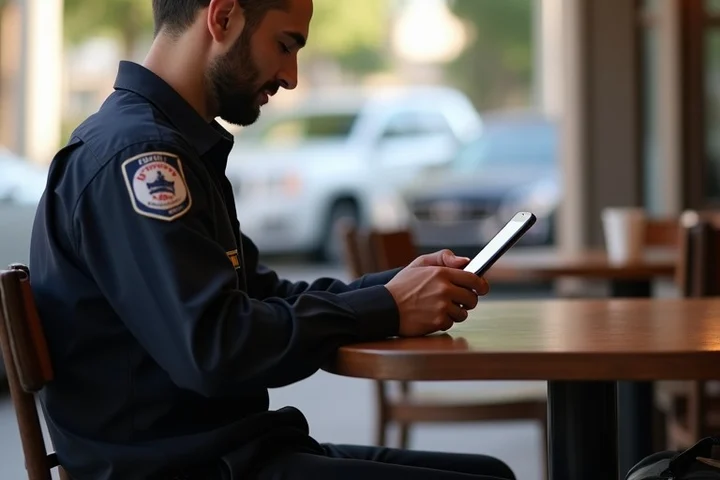
A cancelled plan is common in dating; in a military-connected relationship, it can also follow a duty change with little warning. A credible interruption comes with a broad explanation, acknowledgment of the inconvenience, and an effort to reconnect when free time returns. Exact operational details are not needed or appropriate. Greater concern comes from a pattern of vagueness with no follow-through: repeated disappearances, dismissive replies, or plans that never get rescheduled call for the same caution as they would with any Jacksonville match.
What service details should remain private?
A service member does not need to prove interest by sharing unit names, duty locations, movement dates, work schedules, access credentials, identification images, official documents, or details that could reveal where others are or what they are doing. Broad context is enough: active-duty or veteran status, a general work rhythm, and whether time away or a scheduling change is possible. A profile can say that scheduling sometimes varies without naming a command, posting a uniformed workplace, or linking a current location to a duty pattern.
This limit protects both people. A new match should not ask for photos of credentials, travel documentation, location screenshots, or other sensitive proof as a condition of trust. Dating profiles do not reliably verify military status, and badge or document images can be altered, misused, or unsafe to share. Build trust through consistent conversation, a public first meeting, and behavior that stays coherent over time. Requests for money, gift cards, financial access, or help with an urgent problem are serious warning signs regardless of a claimed service connection. The Federal Trade Commission cautions consumers about romance scams; a military identity should never weaken normal scam defenses.
Public Jacksonville dates also keep a home address, base-adjacent routine, or precise commute from being shared too early. Meet in a public place and arrange separate transportation so either person can leave if the interaction feels off. For immediate help during a local safety concern, contact the Jacksonville Sheriff's Office, the area’s law-enforcement agency.
Jacksonville combines military and civilian dating networks
Jacksonville’s dating pool does not split neatly into military and civilian lanes. Active-duty members connected to Naval Air Station Jacksonville and Naval Station Mayport meet veterans, military contractors, former service families, and civilians with no direct service-life experience. That range is a strength, but assumptions can quickly cause problems. Familiarity with military culture does not guarantee compatibility, and a civilian match needs no prior knowledge to be considerate.
Start by separating daily realities from identity. One person may understand irregular hours immediately; another may need a plain explanation that plans can change with little notice. What matters is whether both people discuss reliability, privacy, and relationship pace without using service status as a shortcut to trust or an excuse for poor communication.
Cross-town travel and workable meeting ranges

In Jacksonville, even a modest profile radius can create an awkward date night. A match near Naval Air Station Jacksonville, Mayport, Jacksonville Beach, or another part of the broader metro area may be reachable on a map but difficult after a long workday, during a narrow leave window, or when traffic turns a simple plan into a major commitment. Straight-line distance reveals little about whether two people can meet regularly.
A workable range is usually based on time rather than miles: how long each person can reasonably travel on a weeknight, whether either person is often on call or subject to short-notice changes, and where a missed plan leaves the other person. Some pairs do well with a midpoint; others prefer alternating sides of town or reserving longer dates for open weekends. The important point is mutuality. If one person repeatedly bears the crossing of Jacksonville while the other keeps availability indefinite, the logistics are showing a relationship imbalance, not merely a transportation problem.
Before chemistry has much room to grow, it helps to know whether a connection is realistically local, occasionally local, or largely long-distance with Jacksonville as its home base. That small distinction prevents weeks of pleasant messaging from being mistaken for a dating routine that can actually be sustained.
When training or deployment changes the relationship's rhythm
Training periods, travel, and deployment can change a relationship's rhythm without providing a clean timetable. Before a disruption begins, the useful conversation covers broad communication expectations rather than promises no one can keep: whether contact may be irregular, what silence is likely to mean, whether either person prefers short check-ins or more space, and how plans will be revisited when availability returns. Exclusivity deserves equal clarity. It should not be presumed from emotional intensity, nor postponed simply because uncertainty makes the subject uncomfortable.
Distance can also magnify small disappointments. A delayed reply may be an access issue; it may also leave the civilian partner carrying uncertainty with no context. Neither person has to accept a communication arrangement that feels chronically one-sided. After training or time away, reconnection may require a fresh conversation about pace, trust, and whether the relationship still fits each person's life. The return is not a test of loyalty. It is a chance to see whether the connection works in ordinary Jacksonville life as well as it did through messages.
State your schedule and disclosure boundaries early
- Share broad availability, such as generally open evenings or variable work periods, without naming duty times, locations, or movements.
- Identify service status plainly when it feels relevant, while keeping documents, credentials, and access-related information private.
- Set a realistic Jacksonville meeting range based on travel time, not a map radius alone.
- Treat consistency, public meetings, and ordinary safety judgment as better trust signals than requests for military proof or financial help.
Dating across military and civilian life in Jacksonville asks for more than flexibility. It asks for boundaries that are calm rather than secretive, travel plans both people can carry, and communication that remains respectful when duty interrupts the usual rhythm.
Sources for this guide
- Jacksonville Sheriff's Office — official information — Jacksonville Sheriff's Office
- Federal Trade Commission — official information — Federal Trade Commission
- City of Jacksonville — official information — City of Jacksonville