
A safe dating site for Asian singles is one whose privacy settings, reporting process, ownership, and limits can be checked before you share much about yourself. Marketing language about safety means very little on its own. You’re looking for a platform that lets you control discovery, deal with unwanted contact quickly, and show you who operates it and how its rules work.
Published by TOP Dating
Safety claims are meaningful only when they can be verified

Start with the unglamorous material: the current privacy policy, terms, safety center, and help pages. The company or legal entity named in those documents should match the publisher named in the app-store listing, where applicable. A real policy explains what information is collected, how it may be shared, how account deletion works, and where privacy requests go. Vague safety slogans do none of that.
It also helps when reporting about a site can be dated and traced to a named publisher instead of an anonymous roundup. Ownership can change, policies can be revised, and a familiar-looking name is not proof of responsible operation. If you cannot identify the operator or find readable, current rules, that is enough to leave the site out of your comparison.
Which privacy controls limit unwanted discovery?
Privacy is not one switch. A useful site gives you meaningful choices over who can find your profile, contact you, and see identifying details.
Profile visibility
You can limit discovery to people you approve, matches, or active participants rather than every visitor.
Your profile is broadly searchable with no clear way to pause or hide it.
Contact permissions
You can restrict who can message, comment, or otherwise initiate contact.
Any account can reach you, with no message controls beyond blocking after contact.
Location display
The service explains whether it shows an approximate area and gives you a way to reduce precision.
It displays a precise location or does not explain how location is presented.
Search-engine exposure
The policy states whether public profile pages can be indexed and how exposure is limited.
Public-facing profiles appear to be designed for open-web discovery.
Photo access
You can control which photos are visible and remove them without losing access to your account.
Every uploaded image is automatically public to the whole user base.
Account deletion
Deletion instructions distinguish deactivation from permanent account removal and explain the request route.
The only apparent option is to stop using the account.
When harassment or fraud occurs, the response workflow matters
The reporting path should be easy to locate from both a profile and a conversation. Before relying on a site, you can open that path without filing a report and see whether it offers useful categories such as harassment, impersonation, fraud, or sexual content. A bare contact form gives you less to work with than a report flow that identifies the problem and lets you attach relevant details.
If something happens, preserve the profile name or link, dates, and screenshots before blocking, since a block can remove your view of the exchange. The platform’s help materials should say whether reports receive an acknowledgment, how follow-up works, and whether there is another support route when the in-app tool fails. Blocking can cut off contact; it does not guarantee that an account has been removed, that information has been recovered, or that someone will not try again under another account.
Identity verification limits
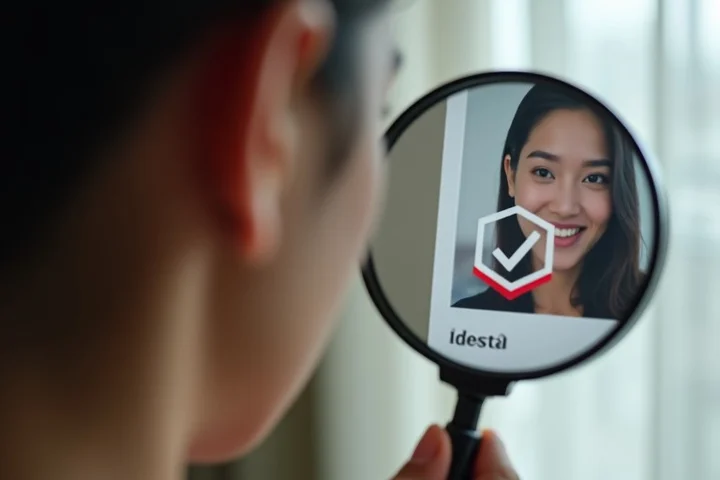
A verification badge can mean only that someone completed the platform’s particular process. A phone check may show access to a number at one point. Photo matching may indicate that a person completed a likeness check, while document review may indicate that a submitted document met a service’s stated review process. Those are useful friction points, especially when the method is explained plainly.
None of them confirms that a person’s dating intentions are honest, that their personal history is complete, or that the person will behave well. It also does not turn a profile into a guarantee of identity tomorrow. Treating a badge as a character certificate is a mistake. The stronger choice is a service that explains what its verification covers, what information it retains, and how a user can report suspected impersonation even when a badge is present.
Recognize ethnicity-filter misuse and fetishizing behavior
An ethnicity filter can be used by people looking for shared background or community, yet it can also make targeting easier. The problem shows up when someone treats Asian identity as a category of presumed traits, sexual availability, submissiveness, appearance, nationality, or relationship behavior. A profile focused on finding an Asian partner without any sign of interest in an individual person deserves caution; repeated racialized comments deserve no benefit of the doubt.
A single uncomfortable remark can justify ending contact. Blocking is appropriate when the attention feels objectifying, and reporting is warranted when the behavior is explicit, repeated, threatening, discriminatory, or tied to requests for money, images, or off-platform contact. You do not owe a stranger an explanation of why a stereotype is offensive. A site’s report categories should be broad enough to cover harassment and discriminatory conduct instead of forcing you to label every incident as ordinary incompatibility.
Specialist communities or broad dating pools
Neither a specialist community nor a broad dating pool is automatically safer. The useful comparison is whether each candidate makes its rules, controls, and moderation process visible.
Community relevance
May make shared identity or cultural context easier to discuss.
May offer more varied backgrounds and relationship preferences.
Whether profiles and filters support individual preferences without encouraging stereotypes.
Moderation depth
May frame community-specific harassment more clearly in its rules.
May have wider reporting categories and more general safety guidance.
Specific conduct rules, report categories, and the path for escalation.
User volume and filtering
A smaller pool can make relevance easier to assess, though it may limit choice.
A larger pool can provide more options, with more noise to filter.
Visibility, discovery, and contact controls rather than the size of the pool alone.
Transparency
A community focus does not replace clear ownership and privacy terms.
A familiar format does not replace clear ownership and privacy terms.
The operator, current policies, deletion process, and verification explanation.
Targeting and impersonation
A stated identity focus can attract people seeking to fetishize or exploit that identity.
A wider audience can also include impersonators and unwanted attention.
Whether blocking, reporting, and privacy tools remain usable in everyday use.
No platform screening process removes residual risk
Residual risk remains after a careful screen: a real account can still misrepresent intentions, misuse information you share, or behave badly. Platform tools reduce exposure and create a response route; they cannot inspect every claim someone makes or prevent every new account from appearing.
A candidate belongs in your pass column when you can document its operator and current rules, see usable privacy controls, locate blocking and reporting tools, and understand what its verification does not prove. It belongs in the reject column when those basics are hidden, confusing, or missing. That standard is practical, not paranoid.
The safest choice is rarely the site with the loudest promise. It is the one that lets you see its operating rules, manage your visibility, report trouble without a maze, and keep its verification claims in proportion. Those are protections you can actually assess.